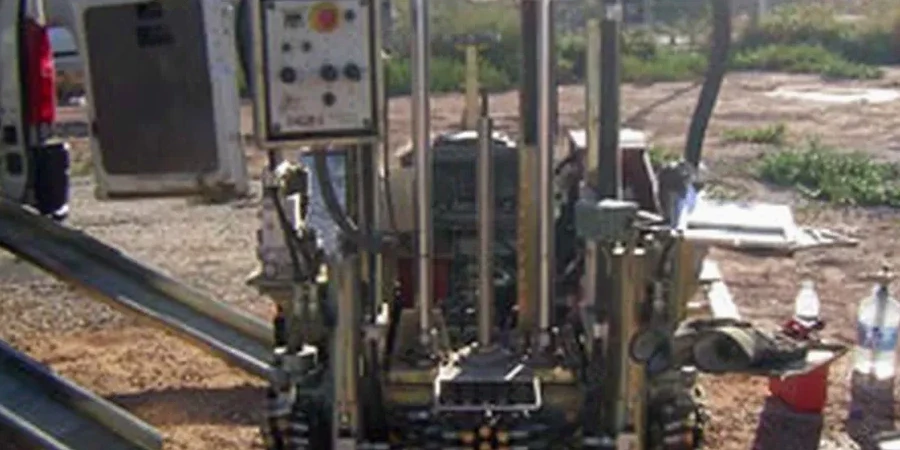
The truck-mounted rig sits on a level pad near the riverfront, a 20-ton beast pushing a steel cone into the ground at a steady two centimeters per second. In St. Louis, that cone hits silt, then clay, then sand, and the sensors stream tip resistance, sleeve friction, and pore pressure straight to the cab monitor. No split spoons. No lab turnaround. Just a continuous log of what the Mississippi River left behind over the last few thousand years. When a developer near Soulard needs bearing capacity before the excavator shows up, this is the tool we deploy first. The ASTM D5778 standard governs every push, and our rig is calibrated daily against load cells and displacement transducers to keep the data defensible for the geotechnical report.
A continuous CPT log catches the thin sand seam that a split-spoon sampler misses every five feet.
Process and scope
Local ground factors
St. Louis sits at roughly 466 feet above sea level, but the real story is the 100-plus feet of unconsolidated alluvium beneath the floodplain. That soft material amplifies ground motion during a New Madrid seismic event—and the USGS puts the probability of a magnitude 6 or greater quake in the next 50 years at 25 to 40 percent. A standard boring with SPT blow counts every five feet can miss a thin, loose sand lens that triggers liquefaction. The CPT cone sees it instantly. Pore pressure dissipation tests tell us how fast that sand will drain when it shakes, and that single data point changes whether the foundation needs stone columns or deep piles driven to bedrock. Guessing wrong in zip codes 63101 through 63118 costs more than the test ever will.
Watch the video
Reference standards
ASTM D5778-20 (Standard Test Method for Electronic Friction Cone and Piezocone Penetration Testing of Soils), ASCE 7-22 (Minimum Design Loads and Associated Criteria for Buildings and Other Structures – seismic provisions applicable to St. Louis), IBC 2021 (International Building Code, adopted by St. Louis City with local amendments), ASTM D2487-17 (Standard Practice for Classification of Soils for Engineering Purposes – Unified Soil Classification System, used for CPT-based soil behavior type charts)
Additional services
Piezocone (CPTu) with Dissipation
The standard CPTu run records qc, fs, and u2 continuously. At key depths we stop the push and let the pore pressure decay; the dissipation curve gives in-situ consolidation and permeability right there in the field.
Seismic CPT (SCPT)
A geophone array behind the cone measures shear wave velocity every meter. That Vs profile feeds site classification per IBC Chapter 20 and eliminates guesswork on the Vs30 value for seismic design in the Missouri side of the metro.
CPT-SPT Correlation Package
For projects where the structural engineer wants N60 values, we run a companion SPT boring near the CPT location and build a site-specific correlation. The deliverable includes both logs, a friction ratio plot, and a soil behavior type chart per Robertson (1990).
Typical parameters
Questions and answers
What’s the cost of a CPT test in St. Louis?
Most single-day mobilizations in the St. Louis metro run between US$190 and US$280 per hour on site, depending on depth, traffic access, and whether you need seismic or dissipation add-ons. A typical 60-foot push with setup and breakdown takes about half a day.
Can the CPT rig work inside a basement or tight alley?
The 20-ton truck needs about 12 feet of overhead clearance and a reasonably level pad. For confined access—think a Soulard basement or a mid-block alley in Benton Park—we can sometimes use a smaller tracked carrier, but we’ll need to scout the access path first.
How does CPT compare to a standard SPT boring?
SPT gives you a blow count every 2.5 or 5 feet and a disturbed sample. CPT gives you continuous tip resistance, sleeve friction, and pore pressure every centimeter, with no sample disturbance. The trade-off is you don’t get a physical soil sample, so we often pair a single SPT boring with several CPT soundings for a complete picture.
Does CPT work in the gravelly soils near the Missouri River bluffs?
It depends on gravel content and particle size. In dense chert gravels or cobble layers, the cone can hit refusal early. We’ll review geology maps for your site—if you’re near the bluffs in Chesterfield or Wildwood, we may recommend pre-drilling through the gravel cap or switching to a test pit for the upper zone.