The most common mistake on St. Louis projects with deep cuts is treating the entire site like it's just soil. You hit the St. Louis Limestone at 15 or 20 feet, and suddenly your passive wedge geometry changes completely. An anchor designed only for the overlying loess will fail bond in the rock section if the socket isn't re-evaluated. The local stratigraphy here—loess over residuum over weathered limestone—creates a three-layer problem that demands separate bond stress calculations per stratum. We see this weekly in the I-64 corridor and around Clayton. For preliminary site characterization before anchor design, we often coordinate with an SPT drilling program to log refusal depth precisely, which defines where the rock socket begins.
Anchor bond in St. Louis Limestone varies from 50 to over 200 psi depending on the degree of weathering; assuming a single design value across a site is a costly error.
Process and scope
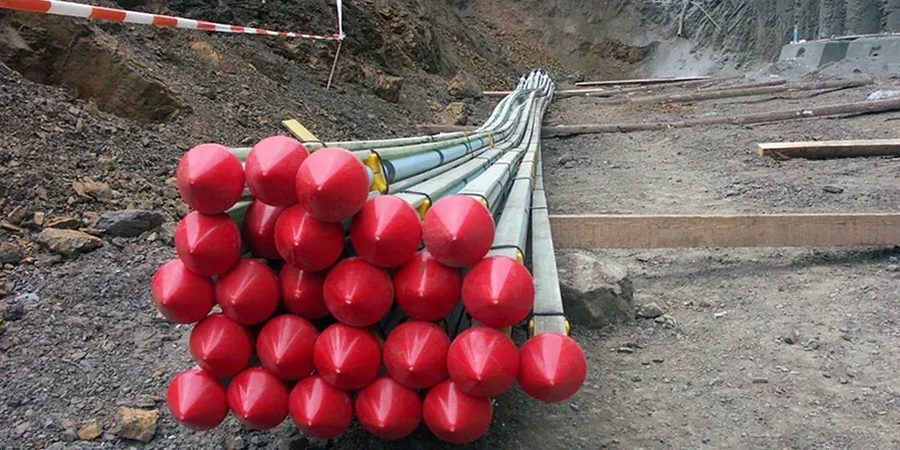
Local ground factors
A 5-story mixed-use building on Manchester Avenue in the Grove neighborhood had a temporary shoring wall with passive tiebacks. The contractor hit a paleosink filled with soft clay at 12 feet—an old karst feature common in the St. Louis Limestone. The original design assumed uniform material and the passive anchors had bond zones right in the clay-filled void. Movement at the top of the wall exceeded 3 inches before it was noticed. We redesigned the anchor field by deepening the passive anchors to socket into competent rock below the paleosink, and switched two positions to active anchors to restore the preload. The lesson here is that St. Louis karst requires either continuous rock coring or at minimum a probe hole at each anchor location before drilling to final depth. You cannot interpolate between borings in this geology.
Reference standards
ASCE 7-22 Minimum Design Loads and Associated Criteria for Buildings and Other Structures, IBC 2021 International Building Code, Chapter 18 Soils and Foundations, ASTM A416 Standard Specification for Low-Relaxation, Seven-Wire Steel Strand for Prestressed Concrete, PTI DC-35.1 Recommendations for Prestressed Rock and Soil Anchors, FHWA-NHI-10-024 Drilled Shafts: Construction Procedures and LRFD Design Methods
Additional services
Active anchor system design
Prestressed grouted anchors for tied-back walls in cuts exceeding 15 feet. Includes bond length calculation in mixed loess/limestone profiles, stressing sequence, and lock-off load specification. Suitable for permanent retention along MetroLink corridors or temporary shoring for deep basements downtown.
Passive anchor and soil nail analysis
Reaction anchors used in conjunction with cantilever walls or as part of a hybrid system. We model the load transfer in the passive zone using limit equilibrium methods, accounting for the confining stress reduction when the loess is exposed to seasonal moisture variation.
Typical parameters
Questions and answers
What is the difference between active and passive anchors?
An active anchor is prestressed after installation—you jack it to a design load and lock it off, actively compressing the soil or rock behind the wall. A passive anchor is not prestressed; it only develops force as the wall moves and the ground deforms against it. In St. Louis, we use active anchors where movement tolerance is tight, like next to existing buildings in Soulard, and passive anchors for temporary cuts where some deflection is acceptable.
How long does anchor design and testing take for a typical St. Louis project?
Design and shop drawing preparation usually takes two to three weeks after we receive the geotechnical report. Installation and load testing of the first production anchors adds another week on site. Performance tests run to 133% of design load and we measure creep over a minimum 10-minute hold. The City of St. Louis typically reviews the submittal within two weeks.
What is the cost range for active/passive anchor design for a St. Louis project?
For a typical retaining wall with 20 to 40 anchors, the engineering design package including calculations, stamped drawings, and construction support runs between US$1,120 and US$3,320 depending on wall height, number of anchor rows, and whether load testing procedures must be written into the specification. Anchor materials and installation are separate and quoted by the specialty contractor.
Can you design anchors if the geotechnical report has limited data on limestone quality?
We can start with conservative assumptions using the weathered limestone parameters from the boring logs, but we'll strongly recommend a supplementary rock coring program. St. Louis Limestone RQD can drop below 25% in karst zones—if you assume competent rock and get a vuggy section, the bond stress assumptions are invalid. We'd rather delay the design by one week to get the core data than approve a socket length that's too short. More info.